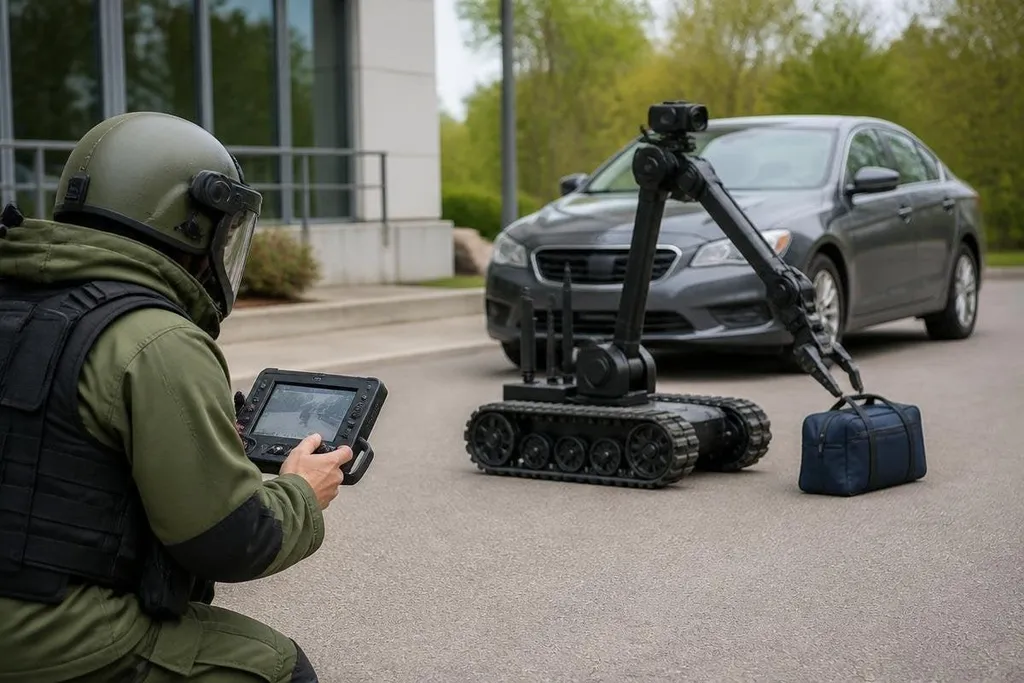
A bomb disposal robot lets a trained operator inspect and handle a suspicious object from a safer position. Its tracked base, cameras, radio link, and arm work as one remote system, so the machine can enter the danger area first.
Quick read
- Cameras give the operator views around the robot and its gripper.
- Tracks cross rough ground while the arm handles objects at a distance.
- Radio loss, blocked views, and limited battery life can stop the job.
What the robot does first
The first task is observation. A team may send the robot toward a vehicle, package, room, or roadside object while the operator watches live video from behind cover.
The robot’s cameras show the object, nearby ground, and the position of its arm. Some systems use more than one camera, because a single view can hide the gripper or the far side of a package. Lights help when the robot works inside a dark building or under a vehicle.
The tracked base matters because bomb disposal sites rarely have clean floors. Tracks can cross broken ground, door thresholds, and small steps that would stop a wheeled platform. The operator controls speed and direction through a remote console rather than standing beside the robot.
That distance changes the risk. If the object contains an explosive device, the robot may be damaged or destroyed, while the operator remains away from the blast area. The machine is replaceable. The trained person is not.
How the arm handles an object
After inspection, the operator uses the robot’s manipulator arm. A manipulator is a powered arm with joints that copy the basic movements needed to reach, lift, turn, and place an object.
The arm ends with a gripper or another tool. A gripper can pick up a bag, move a container, or pull open a door. Tool changes let the same robot carry out different jobs, though each extra tool adds weight and makes control harder.
The operator watches the arm through the camera feed and makes small control inputs. The robot may move slowly because a careful grip matters more than speed near a possible device. If the gripper slips, the operator needs enough camera coverage to see the object and the tool at the same time.
Some bomb disposal robots carry a water disruptor. This tool fires a focused water charge at a device to break its firing circuit or separate parts before the device can work as intended. Its use depends on the object, the distance, the surroundings, and the team’s procedures.
The link is part of the safety system
A remote robot is only useful while the operator can control it. The radio link carries control commands to the robot and sends video back to the console. Walls, vehicles, buildings, and terrain can weaken that link.
When video freezes or control drops, the team needs a set response. The robot may stop, hold its position, or return along a known route, depending on its design and the way the team operates it. A safe response has to be tested before a live callout.
Battery life also sets a hard limit. Driving, lights, cameras, radio equipment, and arm movement all use power. The crew must check the charge before deployment and plan how the robot will be recovered if the task takes longer than expected.
A bomb disposal robot’s battery plan matters only if reports show the task, distance, recovery steps, and operator input. Bomb disposal robotics coverage can tie those details to a dated test, before the next section looks at the work the machine still leaves to people.
What the machine cannot replace
Bomb disposal robots reduce exposure to danger, but they don't remove the need for people. A bomb technician still decides where the robot should go, which tool to use, and when to stop.
The robot may also struggle with stairs, narrow spaces, loose ground, poor radio coverage, or an object hidden behind another object. Its arm has a limited reach and lifting capacity, though the exact limits depend on the model.
The camera feed has limits too. Video can hide depth, wash out bright lights, or lose detail in smoke and dust.
Operators train with the controls and learn how the robot’s camera views differ from normal eyesight. I'd choose a system with clear camera coverage and a predictable stop response before one with a longer arm.
A practical check before deployment
Before sending the robot forward, the team can review these points:
- Check the route: mark steps, loose ground, tight turns, and places where the tracks may lose contact.
- Test the video: confirm that the operator can see the front, arm, gripper, and working area.
- Check the radio: test control at the planned distance and behind the objects that may block the signal.
- Inspect the tools: fit the gripper, disruptor, or other tool and confirm that each one responds correctly.
- Confirm recovery: plan how the crew will move the robot back if the arm jams or the battery runs low.
These checks connect the machine’s parts to the real task. A robot that reaches the object but loses video at the final metre has not solved the problem.
The next useful measure is not a dramatic demonstration. It is whether a trained team can repeat the same remote inspection, tool change, and recovery steps under the site’s actual limits.